IPL (intense pulsed light) technology is used to treat dry eye associated with meibomian gland dysfunction (MGD) and/or lacrimal gland dysfunction and/or inflammatory lesions (rosacea and blepharitis).
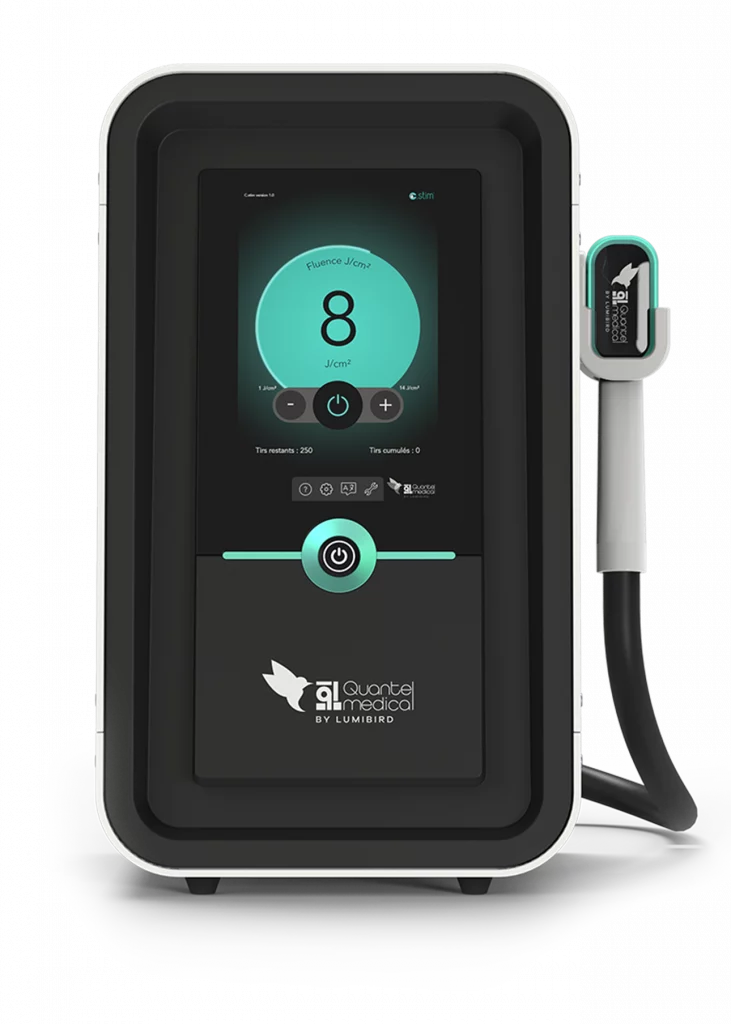
C.STIM is an intense pulsed light (IPL) system that has been designed to offer a safe, painless, effective and long-lasting solution for the majority of skin types.
The treatment involves applying a series of light pulses to the cheek, which:
Stimulates the parasympathetic nerve that controls the glands and reactivates their metabolism
Reduces skin inflammation (rosacea), as IPL light induces coagulation of the small blood vessels. The reduction in rosacea indirectly improves eyelid inflammation (blepharitis)
What happens during C.STIM IPL treatment?
IPL treatment with C.STIM takes place as follows:
Three sessions spaced out by 7 to 15 days
A fourth session may be recommended
One follow-up session after several months may be recommended
Sessions are short (less than 10 minutes), painless and do not require anaesthetic
Clean your skin
Before your appointment, make sure your skin is clean (no creams or make-up, shaved skin for men)
Apply gel
A thin layer of transparent gel is applied to the treatment area
Protect your eyes
Put on the protective goggles provided by your doctor
Four shots
Four shots are made to the cheek. You may feel slight warmth and a little tingling
Clean and moisturise
Remove the protective goggles. Your skin will be cleaned and a moisturising cream may be applied
1
2
3
4
5
Clean your skin
Before your appointment, make sure your skin is clean (no creams or make-up, shaved skin for men)
Apply gel
A thin layer of transparent gel is applied to the treatment area
Protect your eyes
Put on the protective goggles provided by your doctor
Four shots
Four shots are made to the cheek. You may feel slight warmth and a little tingling
Clean and moisturise
Remove the protective goggles. Your skin will be cleaned and a moisturising cream may be applied
What results can I expect?
Improved tear quality
A reduction in symptoms
A reduction in inflammation of the face and eyelids, and fewer Demodex (eyelash parasites)
A lasting improvement (several months)
Download our clinical studies
Parasympathetic Innervation of the Meibomian Glands in Rats
Talk to your ophthalmologist to find out whether you are eligible for treatment.
IPL treatment is suitable for patients who have:
Meibomian gland dysfunction (MGD) and lacrimal gland dysfunction
Inflammatory lesions (rosacea and/or blepharitis)
Infestation de demodex
Difficulty observing treatment
Tried other treatments without success
Meibomian gland dysfunction (MGD) and lacrimal gland dysfunction
Inflammatory lesions (rosacea and/or blepharitis)
Demodex infestation
Difficulty adhering to treatment
Failure of other treatments
What types of care can be provided at home?
Medical treatments and home care complement each other; adopting good daily habits enhances their effectiveness and long-term benefits.
Diet
Focus on omega-3 fatty acids to improve tear quality, and eat fruits and vegetables rich in antioxidants (vitamins A, C, and E).
Hydratation
Stay well-hydrated every day (between 1.5 and 2 liters of water per day).
Environment
Limit use of heating and air conditioning (which can dry out the air) and use a humidifier instead.
Cosmetics
Avoid products containing retinol and opt for skincare products rich in antioxidants (e.g., vitamin C).
Makeup
Avoid applying mascara to the lash line and eyeliner to the mucous membranes; opt for cream eyeshadows and natural products to minimize irritation.
False eyelashes
Avoid false eyelashes, eyelash extensions, and the associated adhesives, which can block the Meibomian glands.
Eyelid hygiene
Warm the area with a USB heating mask, blink frequently, and clean the eyelid margins and lashes. Avoid heat if there is inflammation; it is better to apply cold.
Blinking exercises
Repeat the sequence five times in a row, several times a day
What other treatments are available?
Artificial tears
Anti-inflammatory treatments
Tear plugs
Scleral contact lenses
Tear duct occlusion
Meibomian gland expression
And many others…
1
2
3
4
5
6
...
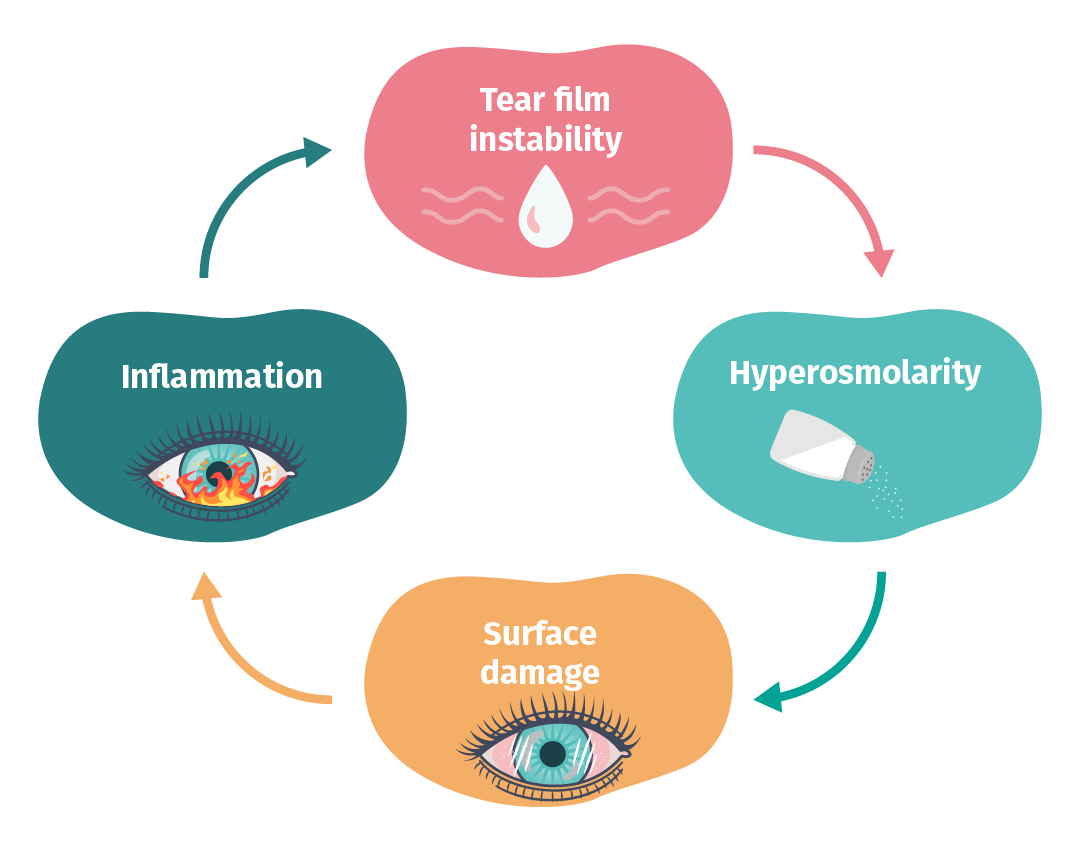
The Vicious Cycle of Dry Eye
It is important to treat dry eye properly, because if left untreated, it can become a self-perpetuating condition and worsen symptoms.
What is dry eye and how is it diagnosed?
New imaging tests—all completely painless—are now available alongside a range of other diagnostic options for dry eye. But how much do you know about this disease?