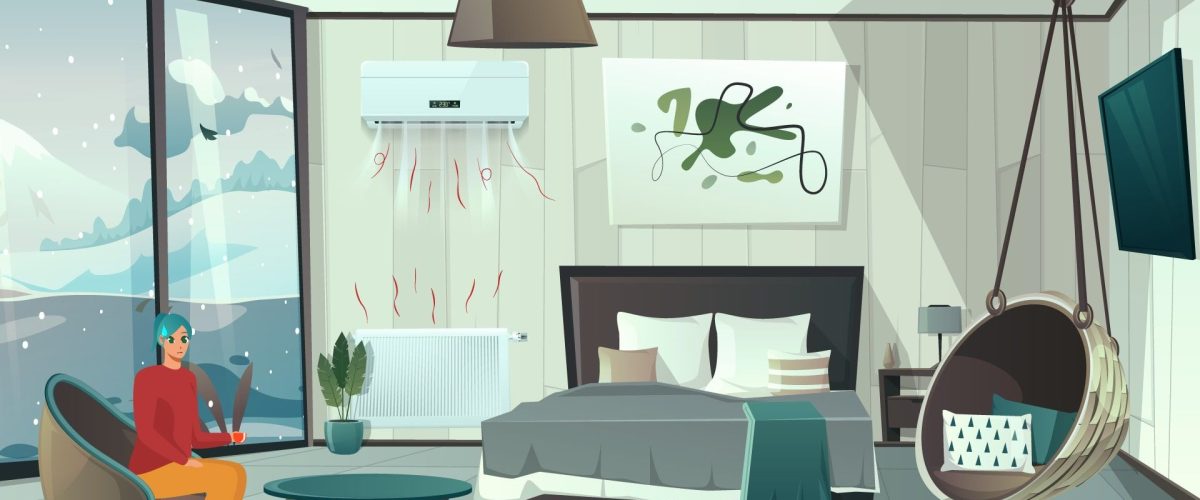
Have you ever noticed unpleasant symptoms such as eye irritation or dryness when you turn up the heating in winter?
These symptoms indicate that you may be developing dry eye.
Why does heating aggravate dry eye?
While dry eye is particularly widespread in summer, it is also very common during the winter months.
Why? Heating makes the ambient air in your house drier in winter. Heated air can have humidity levels of below 20%.
According to a report by the French Society of Ophthalmology published in 2015, humidity levels of below 30% are associated with worsening of dry eye.
Quite simply, when the ambient air is too dry, our eyes dry out too.
Numerous scientific studies have shown that the humidity level ideally needs to be between 40% and 60% to limit the symptoms of dry eye.
Consequently, an increased incidence of diseases related to dry eye is routinely observed at this time of year. It is estimated that 1 in 3 people in France are affected.
How to limit the risk of dry eye linked to a dry environment?
These are our top tips:
- Limit your use of intense forms of heating, such as open fires or wood-burning stoves.
- Ventilate rooms regularly, morning and evening, to allow humid air to circulate.
- Don’t have fan heaters blowing directly on your face.
- Use a humidifier in the rooms where you spend the most time.
- Maintain a healthy lifestyle: drink lots of water (1.5 litres per day), eat a balanced diet with plenty of vitamins, and undertake regular physical activity.
- Blink regularly — every 5 seconds.
- Look after your eyelids (cleansing, heating, massage).
IF THE PROBLEM DOES NOT GO AWAY, SEE AN OPHTHALMOLOGIST.